
Newsletter Signup Template
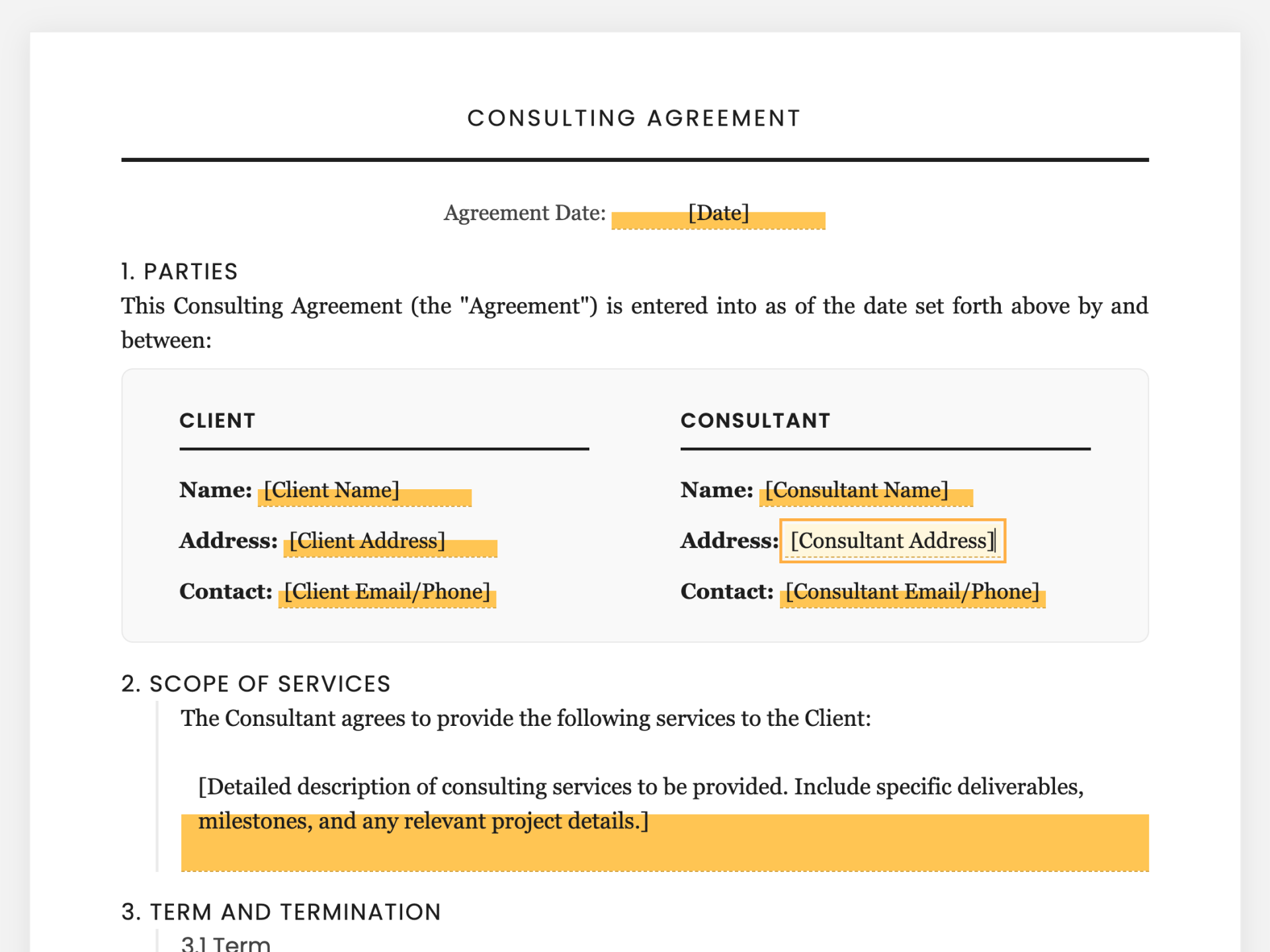
A Consulting Agreement Template is a practical, ready-to-use document designed to clearly define the working relationship between a consultant and a client. This template helps both parties set expectations around scope of work, compensation, confidentiality, and ownership—before any work begins.
Similar Templates


What Is a Consulting Agreement?
A consulting agreement is a written contract that defines how a consultant and a client will work together. It’s often used when a business needs specialized expertise—strategy, marketing, software, finance, operations—but doesn’t want to hire a full-time employee. Instead of relying on informal messages, quick calls, or “we’ll figure it out,” a consulting agreement turns expectations into something concrete: what will be delivered, how it will be delivered, and what happens if reality changes.
In practice, most consulting relationships start with good intentions and move fast. That’s exactly why a consulting agreement template is useful: it forces clarity early, before time, money, and deliverables are already in motion. A good template also removes the friction of drafting from scratch—you’re not “creating a contract,” you’re simply filling in specifics inside a proven structure.
Why a Consulting Agreement Matters
Most consulting issues don’t come from bad intentions—they come from unclear expectations. Without a written agreement, consultants and clients often make different assumptions about scope, revisions, timelines, or payment triggers.
A basic consulting agreement template helps prevent these problems by clearly defining boundaries and responsibilities upfront. It ensures both sides share the same understanding of what “done” means, how value is exchanged, and how risks are handled.
Key benefits include:
Clear scope definition, so additional requests don’t quietly turn into unpaid work
Defined payment terms, reducing confusion around timing, milestones, or satisfaction-based assumptions
Protection around IP and confidential information, especially when work involves proprietary systems or sensitive data
A neutral reference point, so disagreements can be resolved professionally by referring to agreed terms rather than memory
Even for short-term projects, having these terms in writing can prevent long-term friction.
Consulting Agreement vs. Statement of Work: When You Need Each
Consulting agreements and Statements of Work are often confused, but they serve different purposes.
A consulting agreement establishes the rules of the relationship, while an SOW defines the specific work to be delivered.
Who This Template Is For (and Why It Works)

This consultant agreement template is designed for people who want something professional, clear, and flexible—without turning the process into a legal exercise that blocks real work. It works particularly well in situations where the consultant has expertise the client needs quickly, but both sides want to reduce future ambiguity.
Independent consultants and freelancers who want to “upgrade” how they work with clients.
If your agreements are currently handled through email threads or informal messages, a template like this helps you formalize your workflow without becoming rigid. It makes it easier to say, “Here’s how I work,” and establishes payment terms, boundaries, and expectations in a way that feels standard rather than personal.
Startups and small businesses that hire outside expertise and need consistency.
Early-stage teams often hire consultants because they can’t staff every function. The challenge is that these engagements move fast, and the risk is that important terms (like ownership of deliverables or confidentiality) get discussed too late. A free consulting agreement template gives you a repeatable contract structure so you’re not reinventing the wheel each time you bring in external help.
Agencies or teams managing multiple consultants across projects.
When multiple contractors are involved, a standardized agreement reduces operational overhead. It also improves internal clarity: team members understand what’s included, how approvals work, and how deliverables will be handed off, making collaboration smoother across stakeholders.
