Exemplos de workflow de IA: 10 casos reais em diferentes setores
Veja 10 exemplos práticos de workflow de IA para vendas, marketing, operações, finanças, educação, jurídico, consultoria e mais.
O que torna um workflow de IA útil?
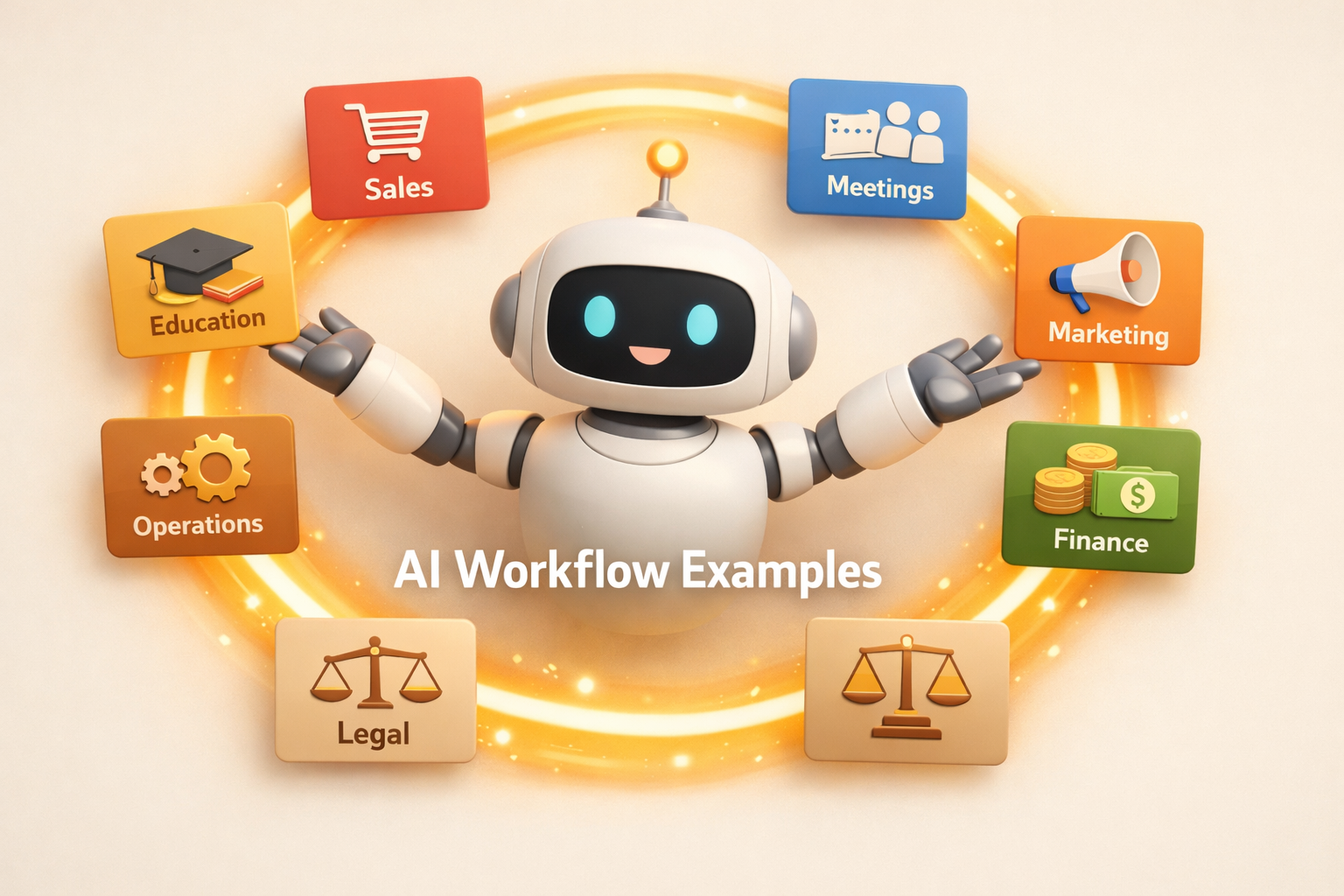
Exemplos de workflow de IA ficam mais claros quando você para de pensar em prompts e começa a pensar em trabalho recorrente. Um bom workflow de IA pega um processo repetitivo, reúne contexto, executa etapas e deixa um resultado que a equipe pode revisar, reutilizar e melhorar.
No Kuse, isso significa um workspace persistente com arquivos, saídas, ferramentas conectadas e tarefas agendadas. Não é apenas uma mensagem de um assistente de IA. É um sistema que continua produzindo trabalho.
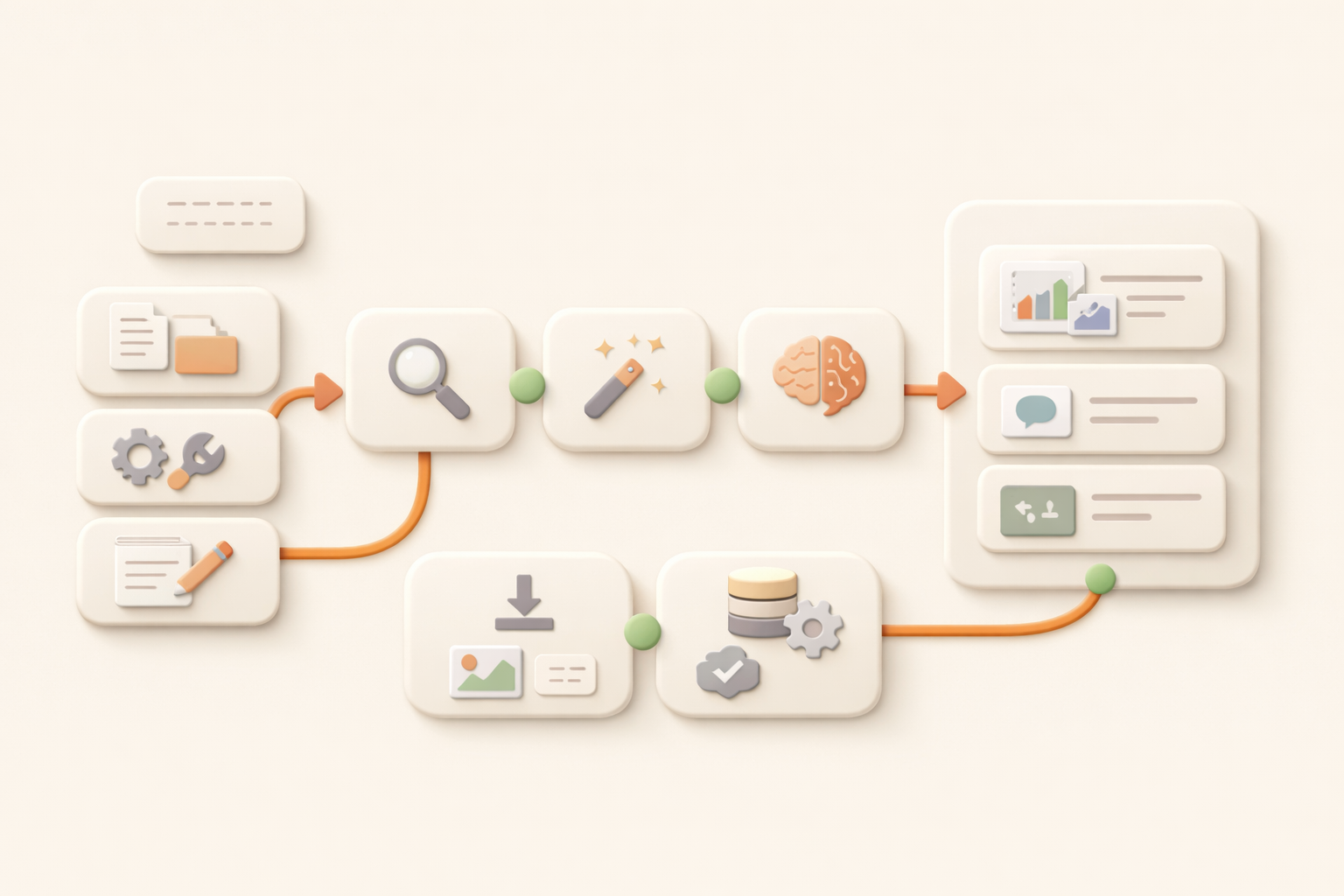
Abaixo estão 10 exemplos práticos de workflow de IA em diferentes setores. Cada exemplo mostra o problema, o que o workflow faz e qual saída a equipe deve esperar.
10 exemplos de workflow de IA
| Example | Problem | Workflow | Output |
|---|---|---|---|
| 1. Sales lead research | Sales teams waste hours opening tabs before every outreach push. | Kuse gathers company info, role context, recent signals, and prior notes, then prepares account briefs and follow-up angles. | A ranked lead brief, outreach notes, and a saved research folder. |
| 2. Meeting prep | Managers walk into calls without enough context because notes live across calendars, docs, and messages. | Kuse pulls attendee context, past notes, open tasks, and relevant documents before the meeting. | A meeting prep brief with agenda, risks, and suggested questions. |
| 3. Weekly status reports | Teams spend Friday chasing updates and rewriting scattered progress into a readable report. | Kuse checks project files and updates, summarizes progress, flags blockers, and drafts the report. | A ready-to-review weekly status report saved in the right folder. |
| 4. Marketing content repurposing | One good asset rarely becomes every channel asset because adaptation is manual. | Kuse turns a long article, webinar, or report into posts, newsletters, and slides while keeping the core message consistent. | A multi-channel content pack with source links and draft copy. |
| 5. Customer support triage | Support teams lose time sorting repeated questions and deciding what needs escalation. | Kuse groups incoming messages, detects urgency, drafts replies, and records recurring issues. | A triage queue, reply drafts, and a weekly issue summary. |
| 6. Finance expense reporting | Receipts, notes, and transactions arrive in different formats and need cleanup. | Kuse extracts details, categorizes spend, checks missing fields, and creates structured reports. | A clean expense spreadsheet and exception list. |
| 7. Education lesson planning | Teachers reuse materials but still spend hours adapting them for each class. | Kuse reads past lesson plans, standards, and student context, then drafts updated plans and worksheets. | A lesson plan pack with activities, materials, and follow-up tasks. |
| 8. Legal research organization | Legal work requires source discipline, but research notes often become fragmented. | Kuse collects sources, summarizes findings, links citations, and organizes evidence into folders. | A research memo with source cards and open questions. |
| 9. Consulting proposal drafting | Consultants repeat proposal structure but must tailor every deck to the client. | Kuse reads the brief, past proposal examples, research notes, and pricing inputs, then drafts a client-ready outline. | A proposal draft, assumptions list, and supporting research folder. |
| 10. Operations process monitoring | Operations teams know the process, but people forget steps and deadlines. | Kuse tracks recurring checks, finds missing updates, pings the right context, and keeps an output log. | A process tracker, blocker summary, and audit trail. |
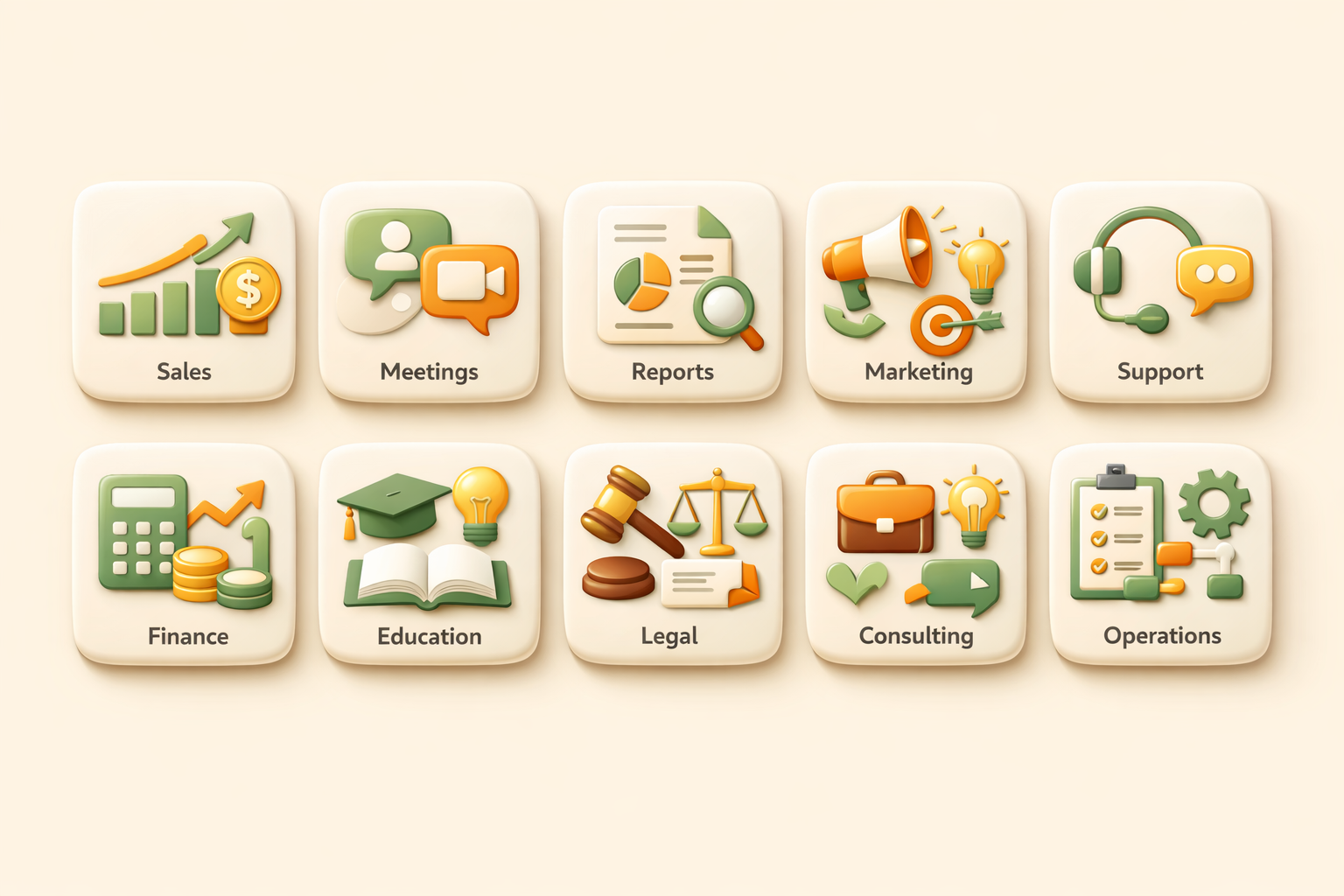
Tabela comparativa: trabalho manual vs workflow de IA
| Dimensão | Manual | Workflow de IA |
|---|---|---|
| Início | Uma pessoa precisa lembrar de começar. | Uma agenda, sinal ou pedido em linguagem natural inicia o processo. |
| Contexto | O contexto é reunido de memória, abas e arquivos antigos. | Kuse reúne arquivos, ferramentas conectadas e histórico. |
| Saída | Resultados ficam espalhados em mensagens ou planilhas. | Resultados são salvos como arquivos estruturados. |

A tabela organiza a estrutura. O próximo passo é escolher um workflow específico em que as fontes de entrada e o resultado final já estejam claros.
Como escolher o primeiro workflow para automatizar
Comece por um trabalho que acontece toda semana, usa as mesmas fontes e gera um resultado reconhecível. Relatórios, briefings, trackers, resumos de pesquisa e pacotes de conteúdo são bons candidatos.
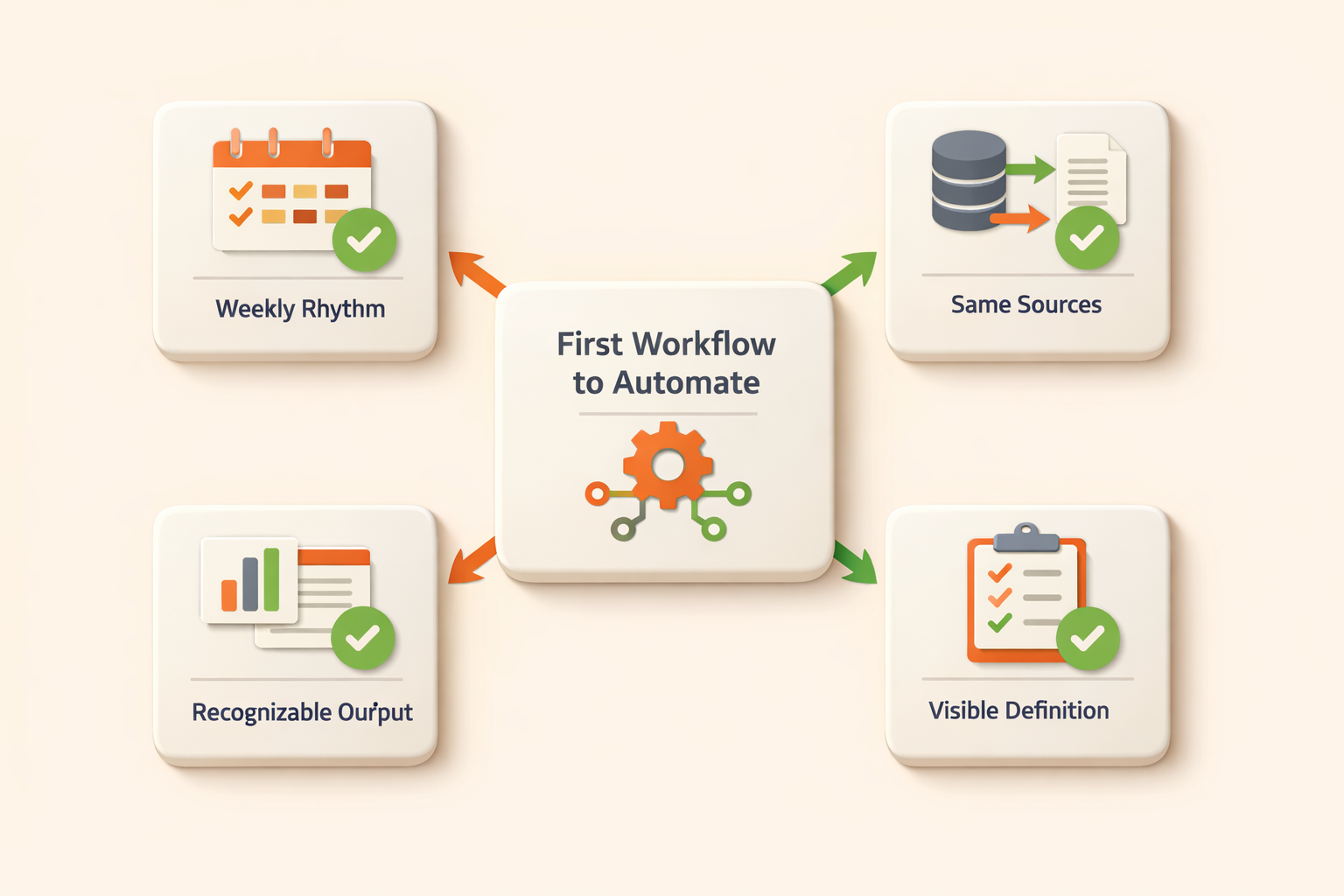
Evite começar por um processo sem dono claro ou sem saída padrão. A automação de workflow com IA funciona melhor quando a definição de pronto está visível.
FAQ
O que é um exemplo de workflow de IA?
É um processo repetível em que a IA reúne contexto, executa etapas e produz uma saída reutilizável.
Qual é a diferença para um prompt?
Um prompt é um pedido único. Um workflow de IA é um sistema repetível com contexto, etapas e saída.
Start building with Kuse
Kuse turns recurring work into an AI workflow with memory, connected tools, and reusable outputs. Try Kuse for free and build a workflow that keeps working after the chat ends.